A Strategy To Reduce Fleet Collisions
Every fleet collision is a failure of a system that had weeks, sometimes months, of warning signs.
A driver who keeps clipping curbs. A brake pad that’s been due for replacement since the last oil change. A vehicle that’s been dispatched at hour 10 of what should be an 11-hour day. The crash doesn’t happen out of nowhere — it happens because nobody connected the dots in time.
This article walks through what actually works to reduce fleet collisions: not just the obvious stuff, but the operational habits and technology that separate fleets with clean safety records from the ones spending their Thursday afternoons on the phone with insurance adjusters.
Why Fleet Collisions Are a Different Category of Risk
A regular fender-bender in a personal vehicle is annoying. The same incident in a 40,000 lb commercial truck is a career-ending event for someone in your organization — possibly literally.
Commercial vehicles are involved in a disproportionate share of fatal road accidents not because fleet drivers are worse than the average driver, but because the consequences of any error are amplified by mass, speed, and cargo. When something goes wrong at highway speed with a loaded trailer attached, physics gets the final say.
The regulatory side makes it worse. A serious collision involving a commercial vehicle triggers DOT investigations, CSA score impacts, and potential FMCSA scrutiny. If your Hours of Service logs show the driver was on hour 13 when it happened, your compliance problem becomes your legal problem in the same breath.
Here’s the uncomfortable truth: most fleet collisions are preventable. Not all of them, but most. And the ones that aren’t prevented are usually the ones where someone in management had the data and didn’t act on it.
The Real Cause of Most Fleet Collisions (It’s Not What Drivers Think)
Ask most drivers what causes fleet collisions and they’ll list: bad weather, reckless other drivers, poor road conditions.
Ask the data, and it tells a different story.
The leading contributing factors to commercial fleet collisions are:
| Factor | Why It Matters |
|---|---|
| Driver fatigue | Reaction time drops below drunk-driving levels after 18 hours awake. HOS rules exist for a reason. |
| Distracted driving | A 5-second glance at a phone at 60 mph means 132 metres of blind travel. |
| Following distance failure | Commercial vehicles need 2–3x the stopping distance of passenger cars. Most drivers underestimate this. |
| Speeding (including contextual speeding) | Driving the speed limit in heavy rain or a construction zone is still dangerous speeding. |
| Deferred vehicle maintenance | Brake fade, worn tyres, and failing lights don’t care that the service appointment was “next week.” |
Notice what’s not on that list: freak accidents and unavoidable situations. Most of this is predictable, detectable, and correctable — if you have the right systems in place.
What Management Actually Controls (More Than You Think)
There’s a tendency in fleet safety to treat collisions as a driver problem. Driver training, driver coaching, driver this, driver that.
That’s not wrong — but it’s incomplete.
The conditions that produce risky driving are largely created by operational decisions. Impossible delivery windows. Under-maintained vehicles dispatched anyway. Routes that force drivers to choose between being on time and being safe. Coaching programs that only tell drivers what they did wrong, never what they did right.
As Vishal Singh, CEO of GoFleet, puts it plainly: “The industry gets it wrong when it’s always critiquing — always pointing out what the driver did wrong. Where’s the recognition? Where’s the positive reinforcement that makes the driver see the value of the system?”
If your safety program feels like surveillance with better branding, drivers will treat it like surveillance.
5 Strategies That Actually Reduce Fleet Collisions
1. Fix the Maintenance Problem Before It Fixes You
A vehicle that shouldn’t be on the road will eventually make that point very clearly.
Pre-trip inspections catch obvious issues, but they don’t catch the brake pads that are at 20% and will hit zero somewhere around Thursday. That’s what preventive maintenance software does — it monitors actual odometer data, diagnostic fault codes, and service intervals and tells you before the vehicle becomes a liability.
Zendu Maintenance integrates directly with your telematics data to track real vehicle usage and schedule service at the right time, not just based on calendar months. For a large fleet, this is the difference between a scheduled bay appointment and an unscheduled roadside breakdown in the middle of lane two on the highway.
The pre-trip inspection still matters. Drivers should be checking tyres, fluids, lights, and brakes before every departure. But it’s the layer underneath — the systematic maintenance scheduling — that catches what the morning walk-around misses.
2. Use AI Dashcams for Coaching, Not Just Evidence Collection
Here’s how most fleet dashcam programs work: a driver does something dangerous, the camera records it, a manager reviews it three days later, sends a coaching email, and the driver feels micromanaged.
Here’s how it should work: the camera detects the behaviour in real time, gives the driver an immediate in-cab audio cue, the behaviour changes, and no one has to have an awkward conversation.
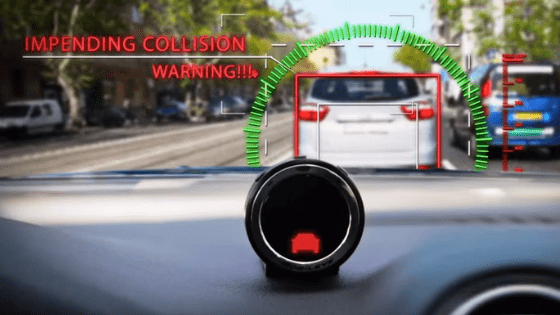
The ZenduCAM ADAS system — along with GoFleet’s broader ZenCAM offering — uses AI to detect distracted driving, harsh braking, following distance violations, and lane departure in real time. The coaching happens inside the cab, not in a manager’s inbox.
This matters because the goal isn’t documentation. The goal is changed behaviour. And behaviour changes fastest when feedback is immediate.
One more thing: dashcam footage is a two-way street. It protects your drivers from fraudulent claims just as much as it documents genuine incidents. The number of staged accidents targeting commercial vehicles is not small. If a car deliberately brakes in front of your truck at a traffic light, you want video evidence — not a “he said / she said” in a courtroom six months later.
3. Build an HOS Compliance System That Runs Without Reminders
Fatigued driving is one of the highest-risk factors in commercial fleet collisions. Every fleet operator knows this. Yet plenty of drivers still get dispatched at hour 10 of an 11-hour limit, with a route that adds another two hours.
Not because their manager is irresponsible. Because nobody caught it in time.
Geotab Drive ELD integration with your dispatch workflow solves this by making HOS compliance part of the dispatch decision — not an afterthought checked at the end of the day. When the system knows a driver’s available hours before you assign the next run, the answer to “can you take this route?” becomes automatic.
Drivers don’t want to drive fatigued either. They just need a system that makes it easy to say no.
4. Track Behaviour Trends, Not Just Incidents
A driver with three harsh braking events this week and zero last month isn’t having a bad week — they’re a warning sign.
The difference between reactive safety management and proactive safety management is what you do with that trend before it becomes a collision report.
Driver behaviour monitoring through your telematics platform produces safety scorecards that show patterns over time: speeding frequency, harsh acceleration, following distance, idling, seatbelt compliance. Used well, these aren’t disciplinary tools — they’re conversation starters.
“Here’s what the data shows. What’s going on?”
That’s a different conversation than “you had an incident last Thursday.”
5. Stop Treating Safety Policies as Set-and-Forget Documents
Most fleets have a safety policy. It was probably written three years ago, signed by a new hire during onboarding, and last looked at during the incident that prompted the creation of this article.
Policy without enforcement is theatre. Enforcement without data is guesswork.
The operational loop that actually works:
- Clear, written policies — distracted driving, following distance, maximum speed thresholds, mandatory pre-trip inspections
- Technology that captures compliance (or non-compliance) automatically
- Regular reporting that shows trends, not just incidents
- Coaching conversations grounded in data
- Recognition of improvement — not just documentation of failure
That last step is the one most safety programs skip. If the only time a driver hears from management about their performance is when something goes wrong, the program isn’t coaching — it’s punishment with a delay.
What a Proactive Fleet Safety System Actually Looks Like
Let’s make this concrete.
Imagine a mid-size trucking operation — 80 vehicles, regional routes, mixed urban and highway driving.
Before implementing a structured safety system: the fleet manager is reviewing dashcam footage after incidents. Maintenance is scheduled based on mileage estimates. HOS compliance is checked via paper logs. Driver scorecards don’t exist.
After: The telematics platform generates a weekly safety digest automatically — top 10 drivers by score, bottom 10, trend changes. Drivers who improve get acknowledged in the team channel. Drivers with declining scores get a coaching call grounded in actual data, not impressions.
Zendu Maintenance flags three vehicles for brake inspection before they’re dispatched on the week’s longest routes. One of them has a genuine issue that would have made for a very bad Tuesday.
The dashcam system detects a distracted driving event and gives the driver an immediate in-cab audio alert. The behaviour stops. No report is filed because nothing happened.
That’s what proactive looks like. The collision that didn’t happen is the one that matters most — you just never get to see it.
How GoFleet Approaches Fleet Collision Reduction
GoFleet’s safety technology isn’t designed to generate more reports for managers to read.
It’s designed to deliver the right information, to the right person, at the right time — and increasingly, to deliver it directly to the driver before the moment becomes an incident.
The ZenduCAM ADAS provides real-time in-cab coaching for distracted driving, following distance, harsh braking, and lane departure. Zendu Maintenance integrates with vehicle diagnostics to schedule service based on actual usage data. Geotab Drive ELD keeps HOS compliance embedded in your dispatch workflow, not bolted on afterward.
The data from all of these feeds into your safety scorecards and management reporting — so the question shifts from “what happened?” to “what’s about to happen, and what do we do about it?”
If you’re running a fleet and your current safety program is more paperwork than prevention, it’s worth a conversation.
Frequently Asked Questions
What is the most common cause of fleet collisions?
How do dashcams actually reduce fleet collisions?
What is ADAS and how does it help prevent collisions?
How does HOS compliance reduce fleet accidents?

